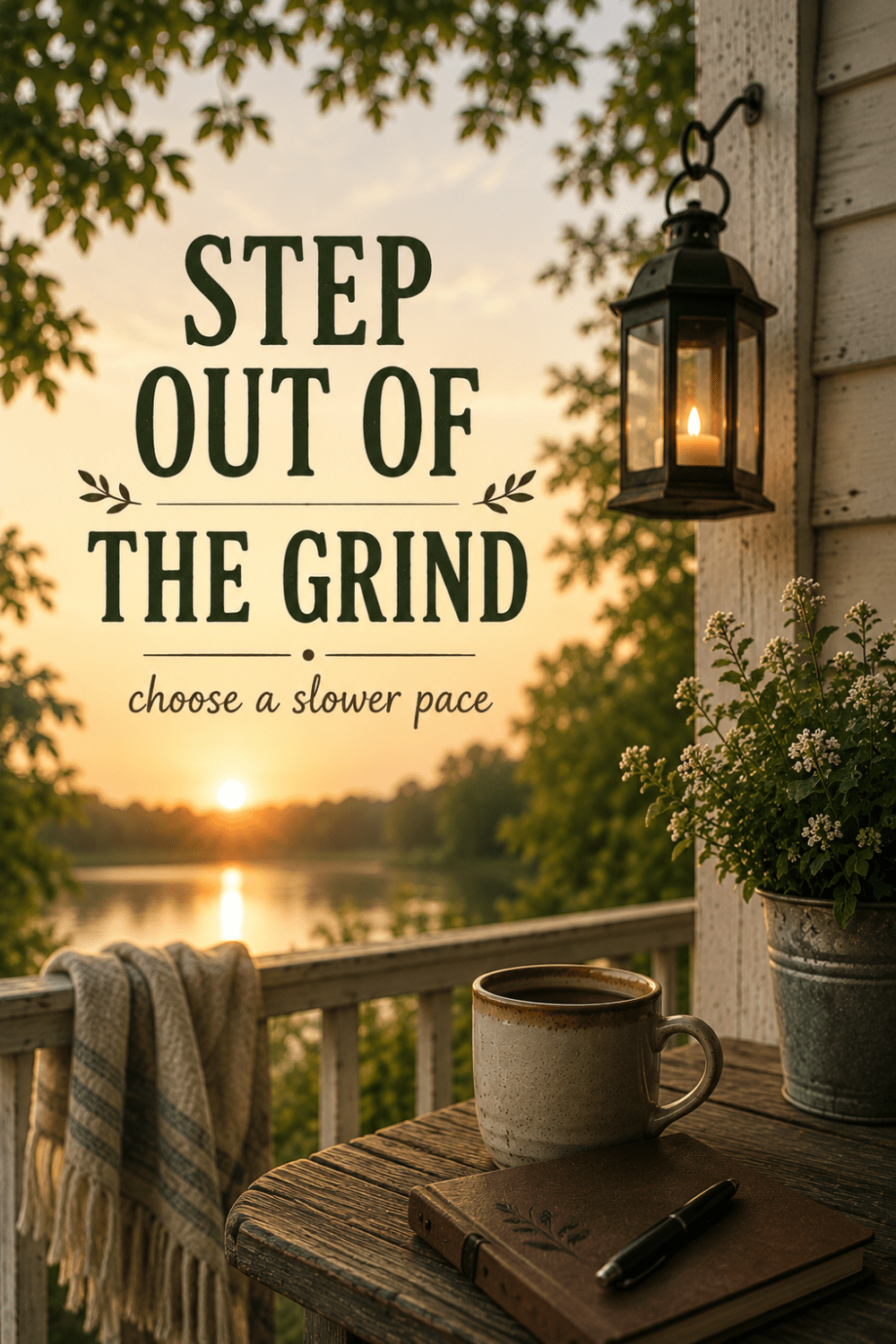
There was a time when summer carried an expectation of slowing down from the busyness of the other months for a little relaxation. Even when people still worked and ordinary responsibilities continued, the season itself seemed to give permission for longer evenings, weekends outside, vacations, family visits, and days when accomplishing very little was not considered a failure.
Now, for many of us, the productivity never really ends.
We carry work home in our pockets. Messages can reach us at any hour, side hustles fill evenings that once belonged to rest, and even hobbies are increasingly measured by what they produce. We track steps when we walk, photograph what we cook, measure progress in what we create, and are constantly reminded that almost any spare hour could be used to improve ourselves, earn something, organize something, or get ahead.
Then August arrives and somehow we are expected to do even more.
School begins again. Workplaces start looking toward fall goals that came from summer goals. Calendars fill, holiday planning appears on the horizon, and stores begin pushing us toward the next season before the present one has even started. The message is familiar: get organized, get motivated, set new goals, prepare, produce, and continue to grind.
But what if we never left it?
Perhaps the answer to August is not becoming better at managing an increasingly crowded life. Perhaps some of us need to question why life became so crowded in the first place.
Slow living does not mean abandoning responsibility or pretending that work, bills, appointments, errands, and obligations do not exist. It means refusing to believe that every available part of our lives must be constantly productive and active.
Not everything needs to become a goal or lead to some measurable result. A walk does not have to count as exercise. A hobby does not need to become a side business. Dinner does not need to be rushed because there are five more things waiting afterward. An empty evening does not need to be filled simply because there is space on the calendar.
The problem with constant productivity is not only that it leaves us tired. It also leaves us distracted. When we are always thinking about what needs to be done next, it becomes easy to stop paying attention to what is already in front of us.
That includes God.
We can rush through prayer because our mind is already on work. We can walk outside without noticing the sky, the birds, or the season changing around us. We can spend an entire day getting things done and barely stop long enough to recognize the ways God has provided for us, helped us, redirected us, or simply been present with us.
Slow living gives us room to notice those things again.
That does not mean every day needs to be quiet or peaceful. Some days are busy because life is busy. Work still needs to be done, bills still need to be paid, errands still need to be run, and sometimes there really is more to do than we would like.
The difference is whether busyness is something that happens sometimes or whether it has become the way we live all the time.
August is a good time to look at that before another season of goals, schedules, holidays, and obligations starts piling on. Instead of asking how much more we can fit into the rest of the year, maybe we should ask what does not need to be added and what quiet moments need time for. That could mean leaving an evening open, eating without scrolling through a phone, sitting outside long enough to notice the changing season, or simply allowing the day to end when its responsibilities are finished. Making room for these things does not mean we are avoiding responsibility; it means recognizing that responsibility and constant productivity are not the same thing.
As the pressure to do more grows through the rest of the year, we can choose not to match its pace. Work will still need to be done and obligations will still need our attention, but they do not have to take every hour we have. Leaving some room in our lives gives us time to notice the people around us, appreciate what God has already provided, pay attention to His creation, and spend time with Him without our minds immediately racing toward the next task. The world may continue telling us to do more and move faster, but we do not have to let the grind decide how we live.


Leave a comment