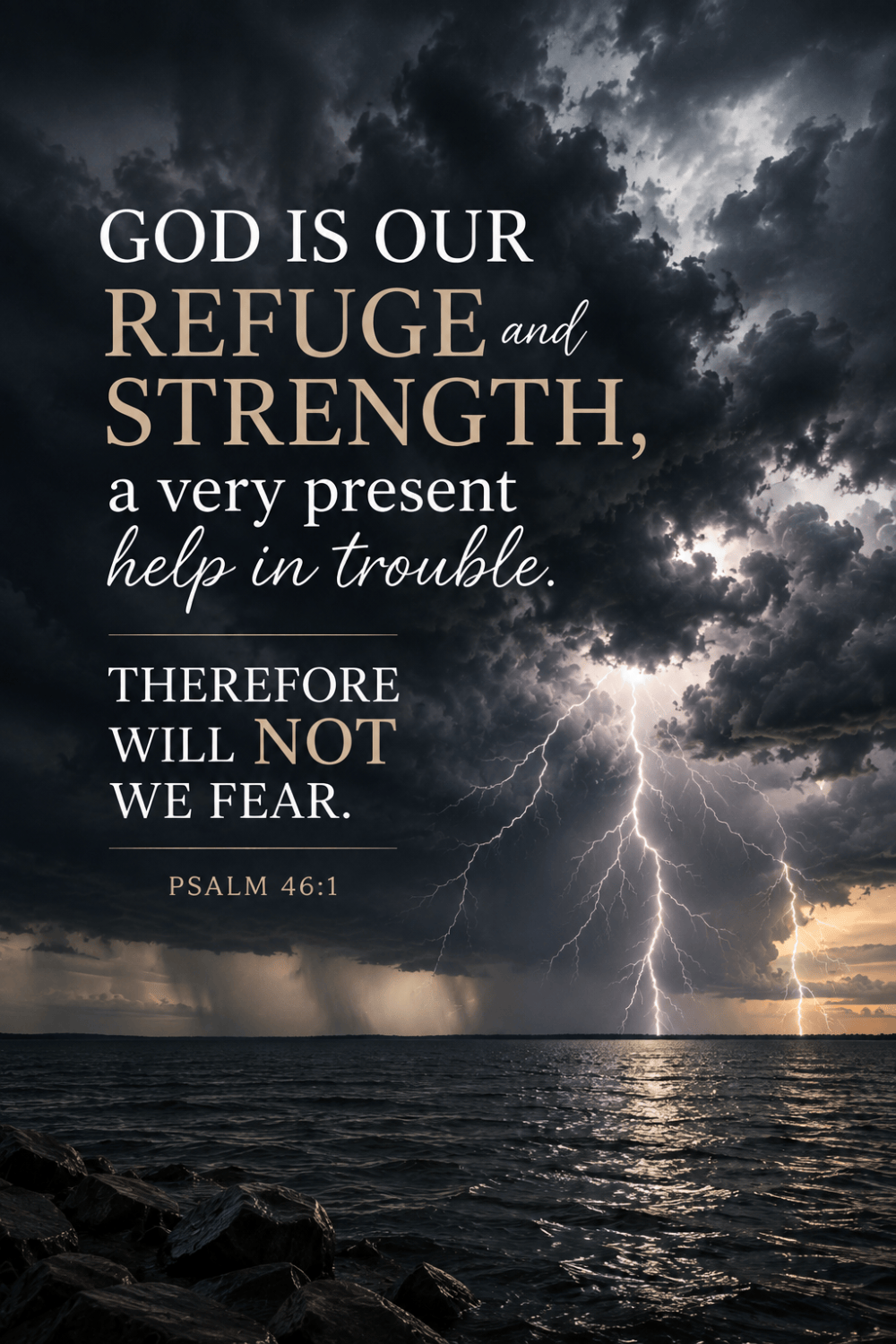
“God is our refuge and strength, a very present help in trouble. Therefore will not we fear, though the earth be removed, and though the mountains be carried into the midst of the sea; though the waters thereof roar and be troubled, though the mountains shake with the swelling thereof.” — Psalm 46:1–3
There are times when life feels steady enough that we barely notice how much we depend upon that steadiness. We have routines, people we expect to be there, familiar places, and some idea of what tomorrow will look like. Then something changes, and suddenly the ground beneath us does not feel quite as solid as it did before.
Psalm 46 begins in that kind of place. The writer imagines the earth being moved, mountains falling into the sea, waters roaring, and everything that once seemed immovable beginning to shake. These are dramatic images, but the point is simple: even when the things around us change, God does not.
“God is our refuge and strength, a very present help in trouble.”
Scripture does not say trouble will never reach us. It says God is present in it.
That matters because hardship can make us wonder whether we misunderstood God, whether we did something wrong, or whether faith should have protected us from this particular pain. Psalm 46 does not answer every question about why difficult things happen. Instead, it tells us where to turn when they do.
A refuge is only needed when something outside of us has become more than we can handle alone. The storm does not mean the refuge has failed. It is the reason we need one.
There are losses we cannot undo, questions we cannot answer, circumstances we cannot control, and problems that cannot be solved by working harder. In those moments, we discover that faith is not about becoming strong enough to control everything around us. It is about knowing where our strength comes from when our own is not enough.
That is why the words “Therefore will not we fear” are so important. The Psalmist is not pretending there is nothing frightening happening. Everything he describes sounds frightening. His confidence comes from knowing that the chaos is not the greatest reality in the picture. God is greater than the chaos, stronger than the fear, and still in control when everything around us feels unstable.
Biblical courage is not pretending fear does not exist. It is refusing to let fear become the final authority over what we believe. We can acknowledge what hurts, admit when we are uncertain, and still remember that God remains greater than the circumstances in front of us.
There may be something shaking in your life today. It may be something obvious, or it may be a quieter uncertainty that has been sitting heavily in the background. You may not know how the situation will resolve or what life will look like afterward.
Psalm 46 does not ask you to pretend everything is steady. It reminds you that your security was never meant to rest entirely on things that can change.
God is described as “a very present help.” That means we do not have to wait until life settles down before we turn toward Him. We can come to Him in the middle of the uncertainty, while the questions are still unanswered and while the outcome is still unknown.
The circumstances may shake, but God remains steady.
A Prayer for Today
Father, when the things around me change, I become afraid because I cannot see what will happen next. I place too much security in routines, plans, people, and circumstances that can change without warning.
Teach me to depend on You more deeply. When my own strength is not enough, remind me that I do not have to carry everything alone. Help me face what is in front of me without pretending it is easy, and keep fear from becoming greater in my mind than Your presence.
Whatever may be shaking today, help me remember that You are still my refuge, my strength, and my very present help in trouble.
Amen.


Leave a comment