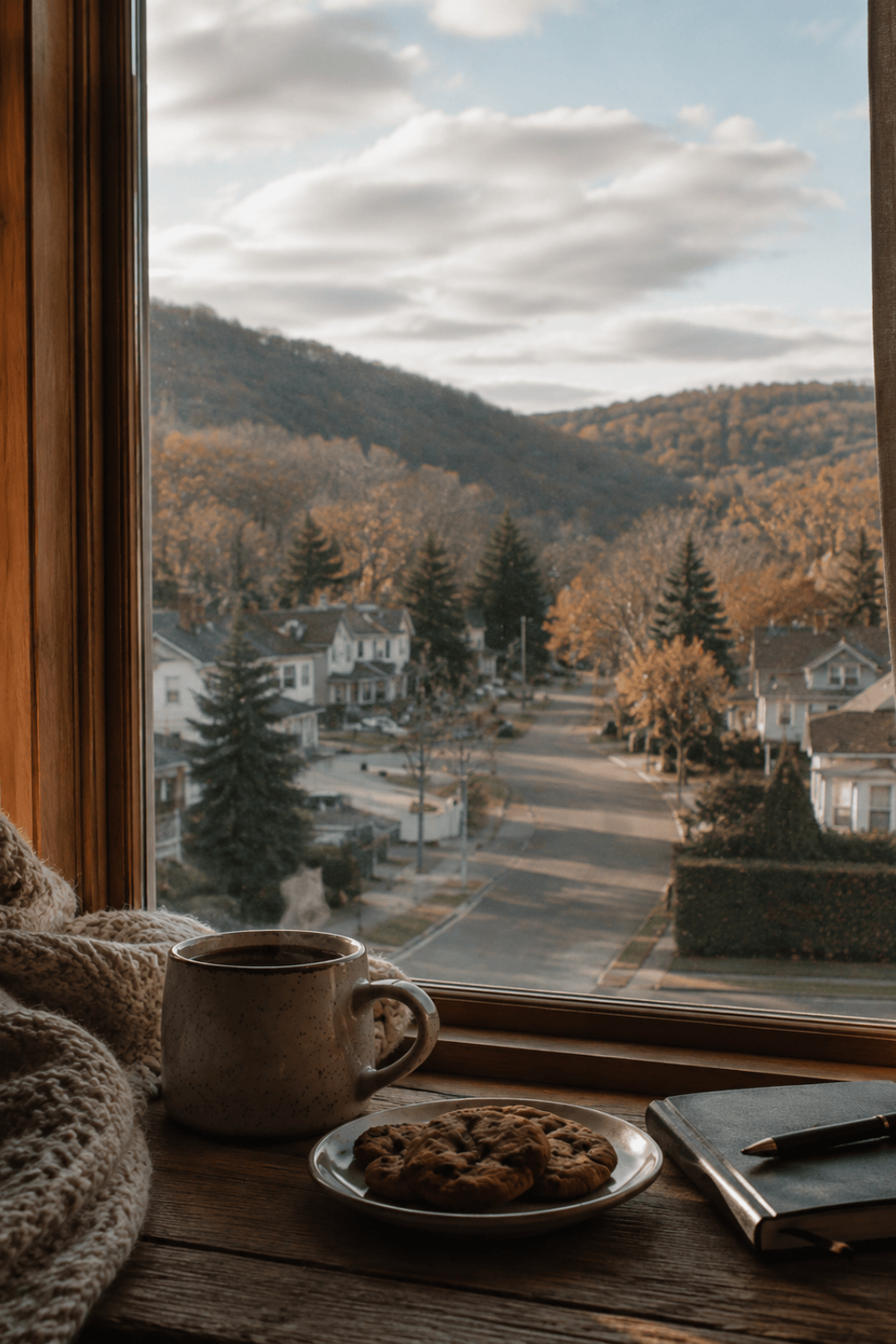
One of the strangest things about modern life is how uncomfortable we have become with empty space. An open evening quickly becomes an opportunity to catch up on something, a quiet Saturday morning turns into errands and projects, and even a few unexpected minutes can send us reaching automatically for a phone, a podcast, or some other form of entertainment. We have become so accustomed to constant activity that an hour without a purpose can feel like something we ought to correct.
In the last Slow Living post, we looked at stepping out of the grind of a world that constantly pushes us toward more work, productivity, and achievement. Yet leaving the grind behind involves more than working fewer hours. It also requires questioning the assumption that every part of our day must be useful, productive, entertaining, or occupied.
For many of us, busyness has become so normal that stillness can feel irresponsible. Sitting outside with a cup of coffee may seem wasteful when there is laundry waiting, while reading, tending a garden, painting, cooking slowly, or simply being at home can produce the uneasy feeling that we should be accomplishing something more important. The problem is not that these activities lack value, but that we have learned to measure nearly everything according to what it produces.
Our culture has become remarkably good at turning even enjoyment into another form of productivity. A hobby becomes a side business, a walk becomes a step goal, reading becomes a yearly challenge, and rest becomes something we do so that we can return to work more efficiently. None of those things are necessarily wrong, but when everything must justify itself through a measurable result, we begin losing the ability to enjoy something simply because it is good to be there.
There should be parts of life that do not have to accomplish anything. We can bake bread because we enjoy working the dough with our hands, sit outside because the evening air feels good, wander through a garden without photographing it, or spend time with someone we love without turning the visit into an event. Nothing measurable may come from those hours, yet that does not make them wasted, because usefulness is not the only measure of a life.
Nature gives us a different picture. A forest contains quiet clearings, fallen branches, dormant ground, and stretches where nothing dramatic appears to be happening. Winter trees can stand for months without producing leaves or fruit, yet we understand that the season is not pointless simply because growth is hidden. Creation moves through rhythms of activity and stillness, while we often expect ourselves to function as though stopping is a malfunction.
When our lives become packed too tightly, we also begin to lose our ability to notice what is happening around us. We move from one obligation to the next and wonder why entire weeks seem to disappear, because although we were physically present for them, our attention was always pointed toward the next task. Leaving some space unfilled allows us to linger over breakfast, let a conversation continue without watching the clock, notice the weather changing, or decide that an afternoon does not need a plan simply because it exists.
Modern life does not provide many natural stopping points anymore. Work, news, entertainment, messages, and other people’s expectations can follow us nearly everywhere, which means quiet often has to be chosen deliberately. Sometimes the phone can remain in another room, a message can wait until tomorrow, the television does not need to provide background noise, and we do not need to know what everyone else is doing, saying, buying, or arguing about at every moment.
A slower life also requires accepting that some things will remain unfinished at the end of the day. There will almost always be another load of laundry, another email, another room that could be cleaned, or another project that could be improved. If we wait until absolutely everything is finished before allowing ourselves to stop, rest will remain permanently out of reach because life continually produces more work.
Recognizing that today’s work is enough does not mean becoming careless about our responsibilities. It means understanding that responsibility does not require endless availability. A home can be cared for without being perpetually perfected, work can matter without consuming every available hour, and a to-do list can still contain unfinished items without becoming evidence that we failed the day.
Slow living is not about creating an empty life or avoiding responsibility. It is about creating enough room around the things that matter that we can actually experience them. Relationships need time that is not constantly interrupted, faith needs quiet enough for us to listen as well as speak, creativity needs room to wander, and our bodies and minds need periods when they are not being asked to perform, consume, respond, or produce.
A life packed tightly from morning until night may look full from the outside while leaving very little room for us to inhabit it from within. The next time you find yourself with an hour that has not already been claimed, resist the urge to assign it a purpose. Sit outside, take the slower way home, linger over a meal, work with your hands, or simply let the house become quiet for a while. What first looks like empty space may turn out to be the place where life finally has room to breathe.


Leave a comment